March 13, 2026
Are we outsourcing human decision-making?

I am a Villan – a lion-hearted Aston Villa fan. I love my football club almost as much as I love my wife and daughters.
So, to write about a game where the result did not go my team's way is painful. And yet, what the game revealed compels me to go there.
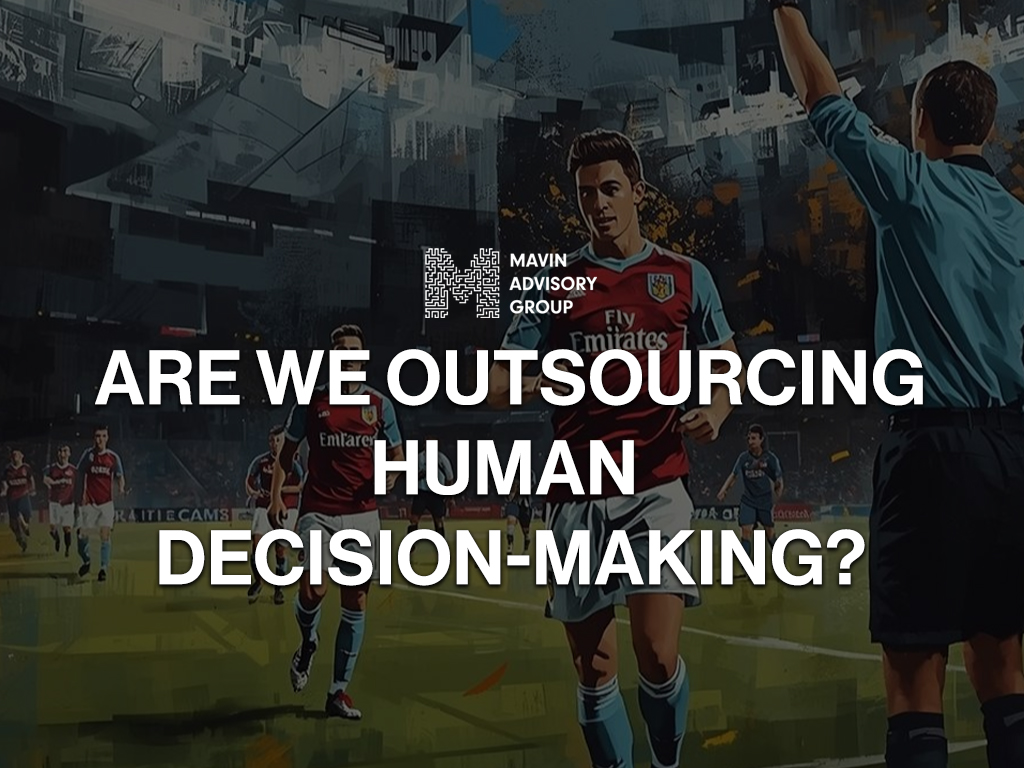
In a recent FA Cup match, played without VAR (Video Assistant Referee), referees made a string of costly errors – offside goals awarded, a penalty missed, red cards mishandled.
And as ex-England striker Alan Shearer observed after the game:
"If you ever need any evidence of the damage that VAR has done to referees, I think today is a great example of that… These guys looked petrified to make a decision today because they didn't have a comfort blanket."
Referees have grown so reliant on VAR that, without it, their decision-making fell apart.
Which raises a question worth sitting with: as AI becomes embedded in how businesses make decisions, are we heading the same way? Are we using AI to strengthen human judgement or are we slowly outsourcing it?
In our industry, most important decisions still rely on context and judgement - how operating models are designed, how risks are mitigated and managed, and how transformation programs are delivered. This requires more than just a human in the loop. It requires human leadership to ensure that it is trustworthy, fit for purpose, and ethical. And humans must remain accountable for these decisions and their outcomes.
What I have learned through my own use of AI is that it does not take away your critical thinking skills. But overreliance on AI does.
VAR has become a tool that thinks for the referee. As AI adoption accelerates, the goal should be the opposite - to use it as a tool that challenges you to think.
In business, AI should improve how decisions are made. However, the most important decisions in any organisation still require human judgement. Technology can support those decisions, but it cannot carry the responsibility for them.
As more businesses introduce AI into their workflows and their teams, how are you navigating this balance?
===

Philip Hope
Mavin Advisory Group Partner
An experienced C-suite executive in global investment managers and asset servicing businesses as well as over 15 years in professional services at Partner level (Morse, Deloitte, Ashurst and now Mavin), Philip has a rich history of advising investment managers, wealth managers and superannuation funds regarding operationally scaling their businesses, reducing operational risk, and improving their cost to income ratio.
===
Mavin Advisory Group is a specialist investment and wealth management consulting firm that provides tailored solutions to meet the unique needs of its clients. Founded by industry experts with a deep understanding of the evolving financial landscape, Mavin delivers compelling insights and innovative solutions to help clients achieve their strategic goals.